The Pitch: A music mogul, targeted by a kidnapping and ransom scheme, comes down from his insular Brooklyn penthouse to reconnect with the streets of New York.
The Verdict: Director Spike Lee’s remake of the Akira Kurosawa classic High and Low contains some of the highest highs and lowest lows in his own film career. The movie announces itself with a bombastic showtune; you’ll hear Norm Lewis sing the opening number from Oklahoma! over the NYC skyline. Don’t bother asking why, since it’s probably just a misguided attempt at irony that will be lost on anyone who’s not on Lee’s cheeky cinematic wavelength. It’s like he can’t help himself, and the viewer can’t help but get caught up in his irrepressible energy even as he stumbles out of the gate and takes about an hour to find his groove.
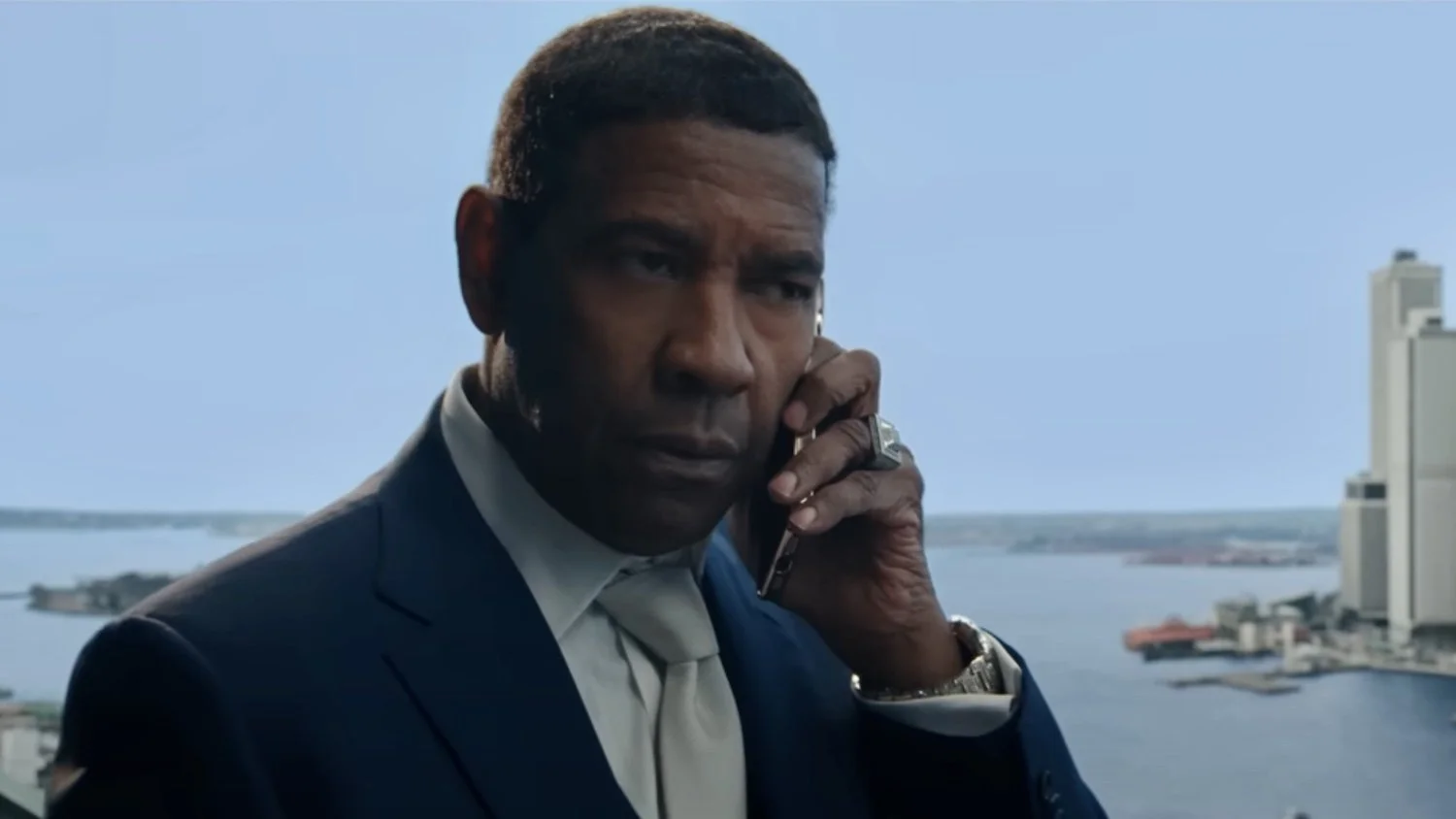
I really struggled with that first hour on my first viewing of Highest 2 Lowest. Some of Lee’s creative choices left me feeling like he had lost his touch, and this was his Megalopolis, a late-period disaster in the making. The one that perplexed me the most was his decision not to let the audience hear the kidnapper’s first ransom call. Instead of being in-scene with David King (Denzel Washington), witnessing the drama unfold firsthand, we’re left to receive his exposition about what happened over the phone while he was out on his penthouse balcony. It’s a pivotal moment in the story, and the bizarre, botched handling of it doesn’t do the movie any favors.
After rewatching Highest 2 Lowest, which is in theaters this weekend, I came away thinking that the first 20 minutes aren’t bad. But the film hits a serious rough patch once King gets home and starts telling his wife about his plan to buy back a controlling interest in his record company.
Seeing Lee reteam with Denzel, his collaborator on films like Malcolm X and He Got Game, should be cause for celebration. And it is, after a while. However, the early penthouse scenes in Brooklyn’s Olympia DUMBO building play like an awkward melodrama between King and his family, with insipid piano noodling that neuters the buildup of dramatic tension. Maybe that’s by design, and form is content, as Lee takes us inside their fake elevated world and shows how cushioned they are against any real consequences. After all, it’s not King’s son who’s been kidnapped. It’s his chauffeur’s. Not his son, not his problem, right?
Whatever Lee’s intent with the penthouse scenes was, the end result is a protracted sequence that drains all the suspense out of the film for about a third of its runtime. Some viewers might never get over that considerable hump. A person watching this on their phone (when it’s available to stream on Apple TV+ next month) could easily get bored and nope out at the halfway point in the firm belief that they were watching a bad movie. It would be a shame if that happened, though, because Highest 2 Lowest actually soars to great heights when it brings King back down to earth in a ransom drop. That’s the paradox of this movie, with its inverted rhythms and scene settings.
Around the 64-minute mark, John Douglas Thompson’s detective looks straight at the camera and says, “It’s showtime,” and you can tell shit is about to get real. The music has already started dancing an Irish jig, courtesy of the Fergus McCreadie Trio and Howard Drossin. And it’s like, “Yo, about friggin’ time! Let’s get this picture in motion.” Then, we’re off to the races, as King boards the subway in his Yankees cap for a whirlwind ride from Borough Hall to 161st Street.
The movie really hits its stride during the National Puerto Rican Day parade, with Rosie Perez showing up in a bit of atonement, perhaps, for an exploitative nude scene Lee put her through in Do the Right Thing. Nicolas Turturro, another Lee regular, also appears, bugging his eyes at the camera as his crazed fan leads a “Let’s go Yankees, Boston sucks” chant on the train. Scenes like these pulse with life and go a long way toward redeeming Highest 2 Lowest.
Kurosawa’s High and Low was more of a sedate police procedural, which continues to be influential to this day, inspiring the production design of this prison in The Batman, for instance. Toshiro Mifune’s protagonist, Kingo Gondō—the analog for “King David” in Highest 2 Lowest—is completely sidelined during the investigation in the second half of the movie. His business is women’s shoes, anyway, so after losing his fortune, all he can do is mow his lawn.
In a post-George Floyd world, it’s understandable that Lee wouldn’t want to glorify the police any more than Hollywood already has. So, instead of having King mow the lawn, he has him take on a more proactive role alongside his aforementioned chauffeur, Paul Christopher (Jeffrey Wright), in Highest 2 Lowest. When the police are of no help, they take the law into their own hands and track down the kidnapper themselves.
As King, packing heat, descends into the bowels of a recording studio with a red door, the remake starts to parallel the original in terms of its physical environments. The Japanese title of Kurosawa’s High and Low is Tengoku to Jigoku, which translates more literally to “Heaven and Hell.” Dialogue reinforces this dichotomy, with lines such as:
“It’s hot as hell down here. An inferno. Feels like 105 degrees. But you’re air-conditioned, aren’t you?”
“From my tiny room, your house looked like heaven.”
“I don’t care if I go to hell. My life has been hell since the day I was born.”
These lines come from the kidnapper, Ginjirô Takeuchi (Tsutomu Yamazaki). It’s not a metaphysical hell he’s talking about, but rather, the kind of social hell on display in a place called Dope Alley. There, Takeuchi uses a junkie as a human guinea pig for an overdose of pure heroin, leaving her dead in a flophouse. While the police are effective at catching him, they do so at the expense of a woman’s life.
For his part, Yung Felon (A$AP Rocky) lives “right in the old hood”—in apartment A24 on 333 Trinity Avenue—in Highest 2 Lowest. Because Lee never was one for subtlety. Yung Felon also commands a whole motorcycle gang, apparently. He has at least three or four accomplices who magically materialize during the ransom drop, never to be seen or heard from again. The movie glosses over them with the line, “You can never trust the help.” And that’s just one example of how a little more thought could have been put into certain things onscreen.
Having said all that, though its flaws are many, Highest 2 Lowest still left me feeling electrified as the credits rolled. Between this and The Magnificent Seven, Denzel Washington is fast-becoming the go-to guy for Kurosawa remakes. As his character here hits the Brooklyn Bridge in gold Beats by Dre headphones, we get the sense that he’s rediscovering something he lost on the road to success—a piece of his soul, perhaps. He tells Yung Felon, “I know what it is to risk everything you have for something that you want. I know what that means. To have nothing and want everything.” But maybe having everything isn’t all it’s cracked up to be, either.